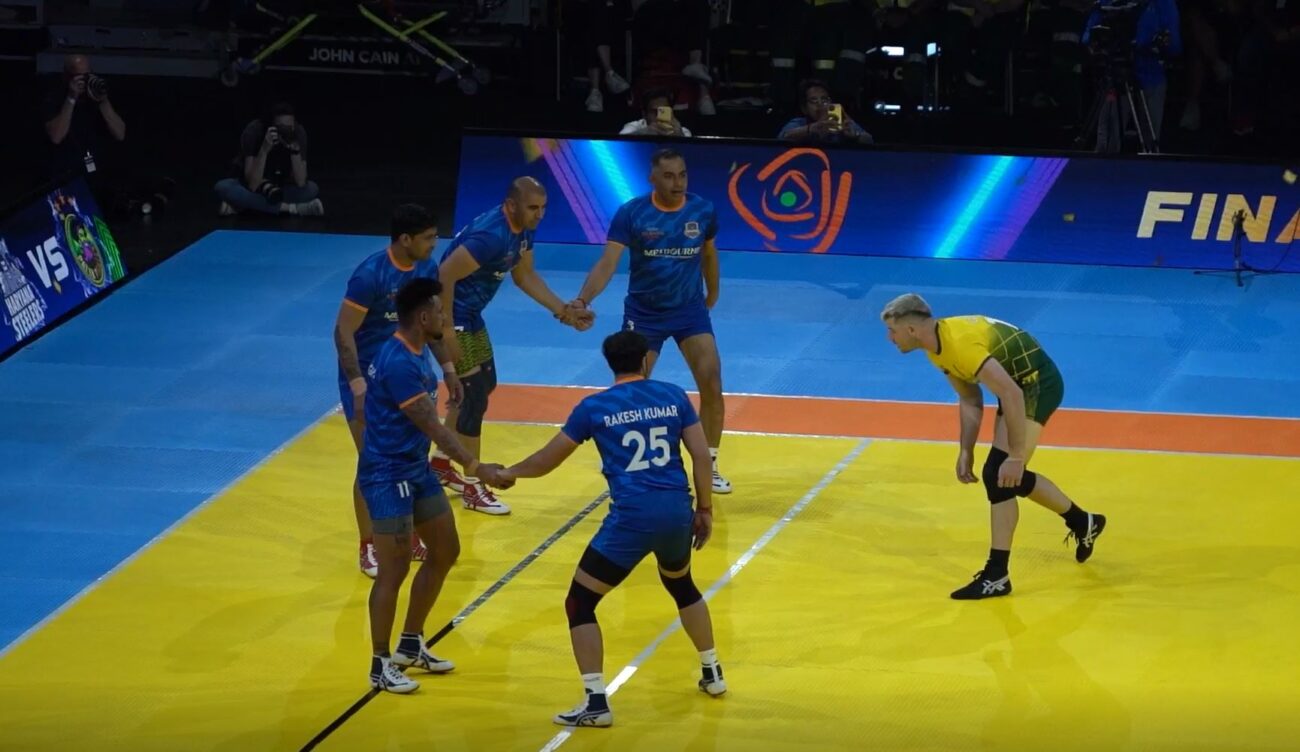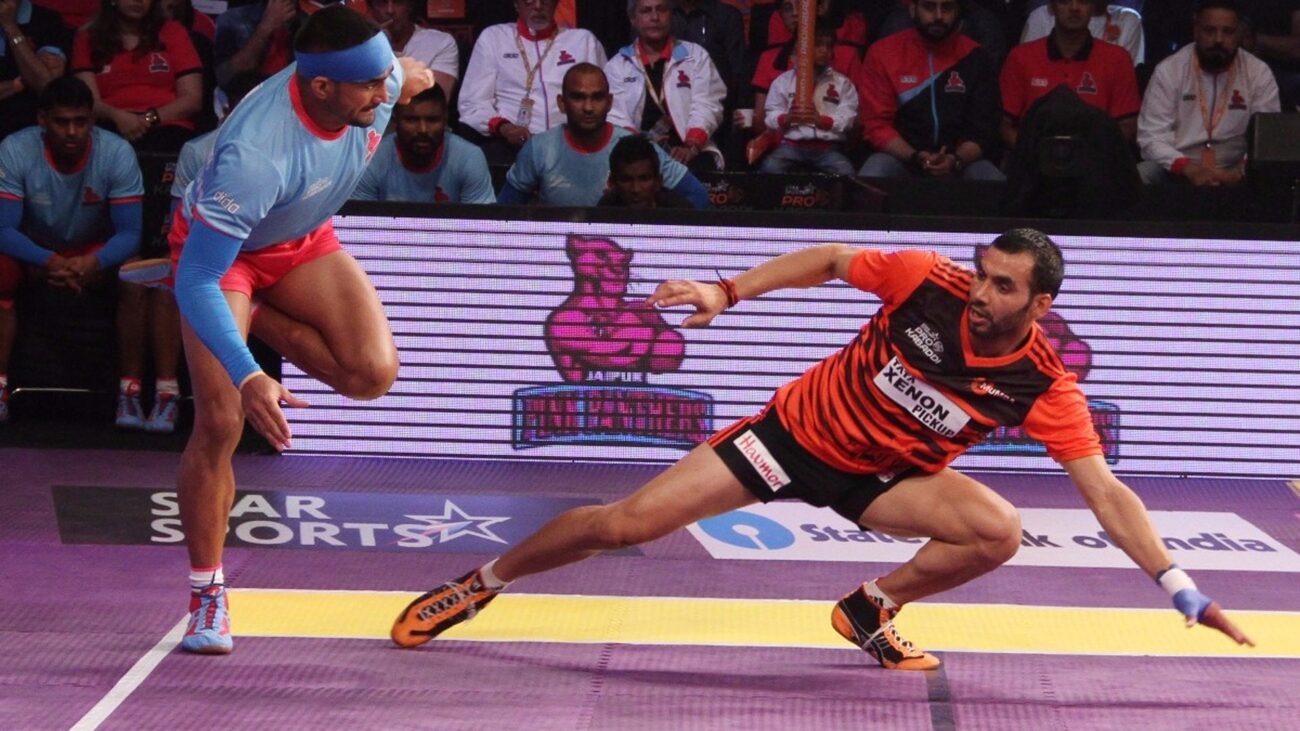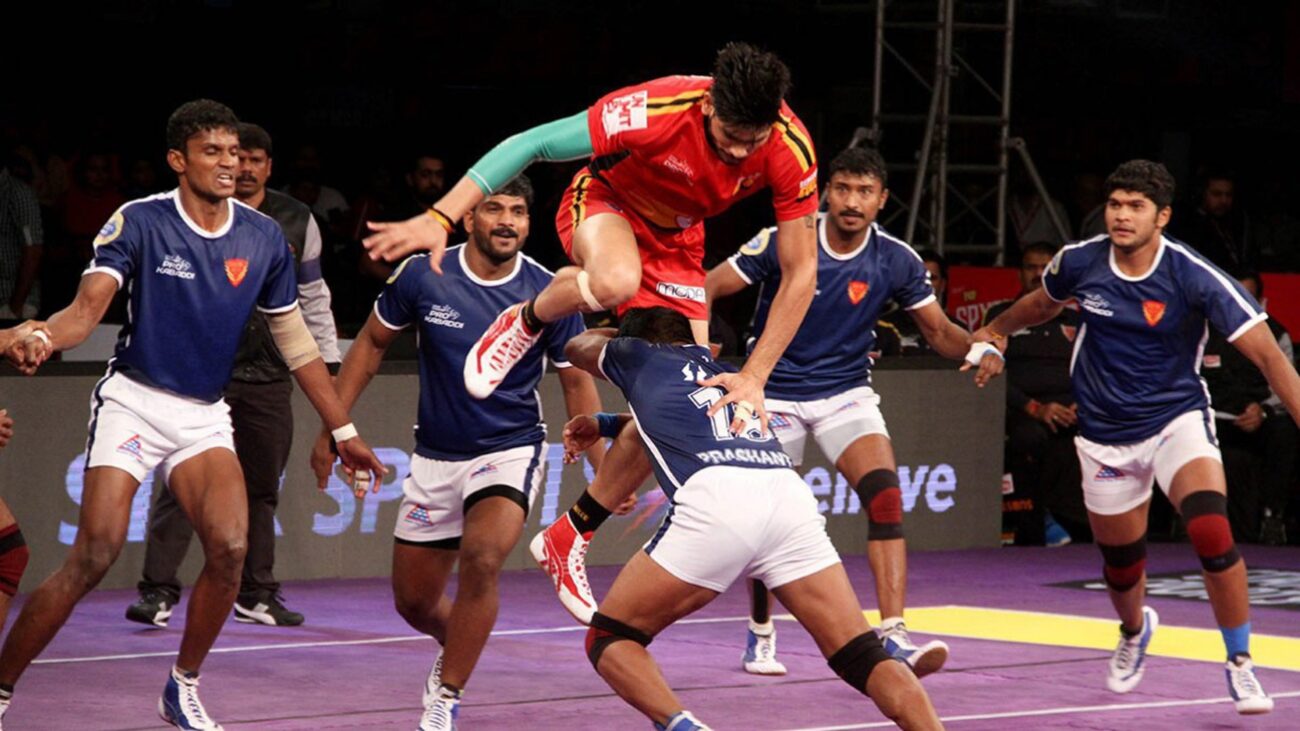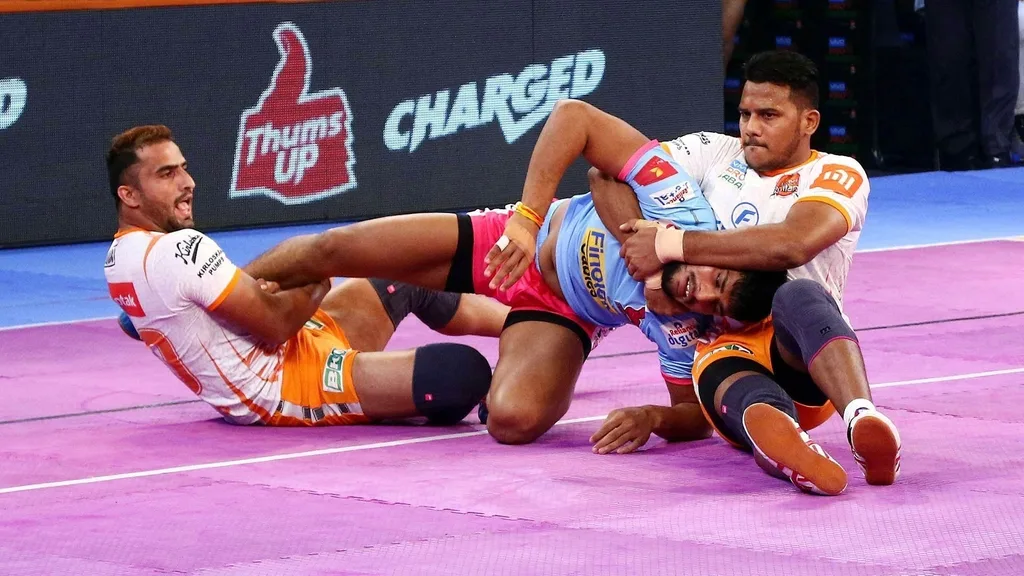
A successful Kabaddi tackle can change the direction of an entire match.
In a matter of seconds, a defender must read an opponent’s movement, choose the correct technique, generate enough force, and coordinate with teammates to stop a powerful raider.
To spectators, a tackle may look like a simple display of strength.
In reality, it is a highly technical movement involving biomechanics, timing, balance, reaction speed, and tactical awareness.
Elite defenders do not simply overpower raiders.
They understand movement.
They understand leverage.
They understand exactly when to act.
Modern Kabaddi defence is a combination of science and skill.
The Physics Behind a Successful Tackle
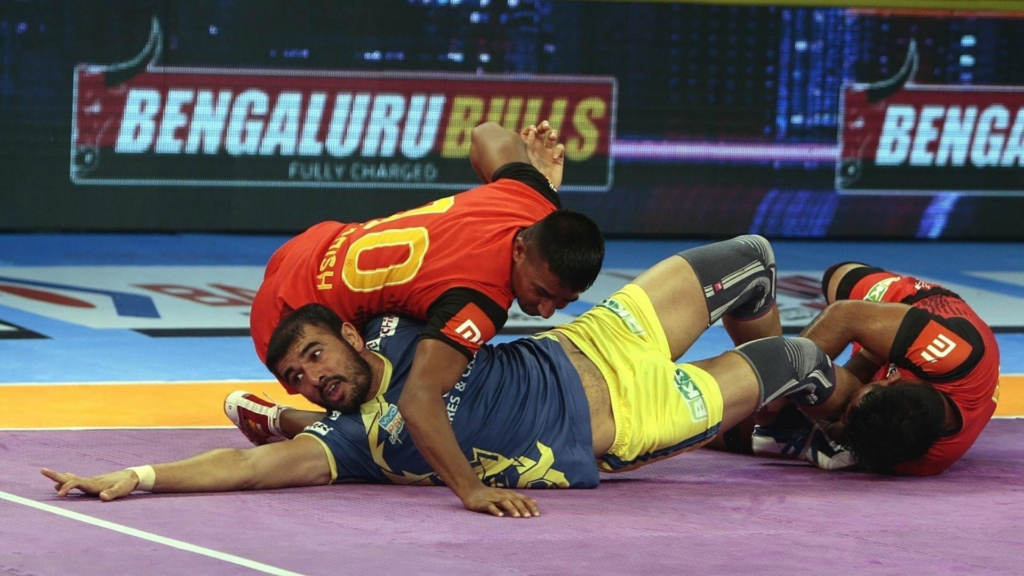
Every tackle involves a battle between two forces.
The raider is trying to:
- Maintain speed
- Change direction
- Escape contact
- Reach the safe zone
The defender is trying to:
- Reduce movement
- Control balance
- Stop forward momentum
- Bring the raider to the ground
The winner is often the player who manages force and positioning more effectively.
A stronger defender does not always win.
A smarter defender often does.
Understanding Biomechanics in Kabaddi
Biomechanics is the study of how the human body moves and produces force.
In Kabaddi, biomechanics helps explain why certain tackling techniques are more effective than others.
Successful tackles depend on:
- Body position
- Centre of gravity
- Joint angles
- Force application
- Timing of movement
Small technical differences can determine whether a tackle succeeds or fails.
The Importance of Body Positioning
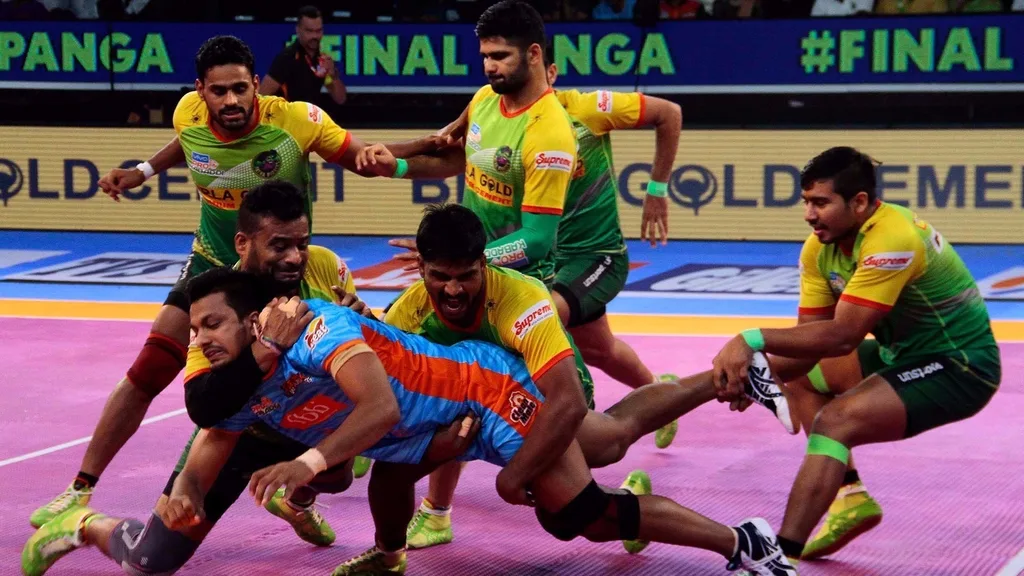
Positioning is one of the most important parts of defence.
A defender who approaches incorrectly gives the raider an advantage.
Maintaining a Low Centre of Gravity
Elite defenders often keep a low stance.
This provides:
- Better balance
- Greater stability
- More control during contact
A lower body position makes it harder for a raider to push through or escape.
Foot Placement
The feet create the foundation of a tackle.
Good positioning allows defenders to:
- Move quickly
- Adjust direction
- Maintain balance after contact
Poor foot placement can result in overcommitting and losing control.
Body Alignment
A defender’s body must remain coordinated.
Effective tackles require:
- Controlled movement
- Strong posture
- Proper alignment between legs, hips, and upper body
A poorly aligned defender may create an opening for escape.
The Science of Timing
Timing is arguably the most important skill in Kabaddi defence.
A defender can have strength and technique, but the wrong timing can make a tackle fail.
Attacking Too Early
If a defender commits too soon:
- The raider may change direction
- The defender may lose balance
- Space may open behind them
Attacking Too Late
Waiting too long allows the raider to:
- Build speed
- Reach the line
- Create separation
The ideal moment is when the raider is vulnerable.
Reading Raider Movement
Elite defenders develop the ability to predict attacks.
They study:
- Foot movement
- Body position
- Favourite techniques
- Previous patterns
A raider often provides small signals before making a move.
For example:
- A change in shoulder position may indicate direction
- A shift in weight may reveal an intended attack
- A change in speed may signal an escape attempt
Defenders use these clues to react faster.
Different Types of Kabaddi Tackles
Each tackle technique has a specific purpose.
Ankle Hold
The ankle hold is one of the most recognisable defensive techniques.
The defender targets the raider’s lower leg to stop movement.
Success depends on:
- Quick reaction
- Accurate timing
- Strong grip
- Immediate control
A well-executed ankle hold can stop even fast raiders.
Thigh Hold
A thigh hold focuses on restricting the raider’s movement by controlling the upper leg.
It requires:
- Strong positioning
- Good timing
- Physical control
The defender must avoid allowing the raider to pull away.
Block Tackle
A block tackle uses body positioning to prevent the raider from moving forward.
The defender aims to:
- Stop momentum
- Control space
- Force the raider backwards
This technique relies heavily on balance and body strength.
Dash Tackle
A dash involves using movement and force to push the raider away from the scoring area.
The technique requires:
- Explosive power
- Precise timing
- Coordination
A poorly timed dash can allow the raider to escape.
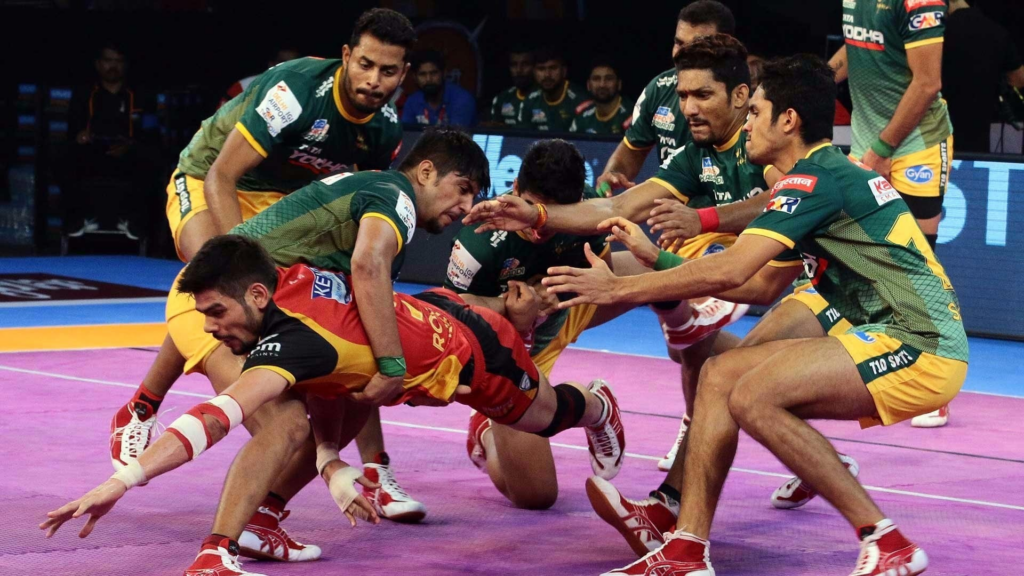
Chain Tackling
Some of the most effective defensive actions involve multiple players.
Chain tackles rely on:
- Communication
- Coordination
- Trust
One defender may initiate contact while others remove escape options.
The Role of Strength and Power
Strength matters in Kabaddi, but it must be applied correctly.
A defender needs functional strength that supports movement.
Important areas include:
Leg Strength
Strong legs help defenders:
- Maintain position
- Resist pushing force
- Generate explosive movement
Core Stability
A strong core helps with:
- Balance
- Rotation control
- Absorbing contact
Grip Strength
Grip strength is essential for maintaining control during tackles.
However, strength alone cannot replace technique.
A poorly timed tackle from a powerful defender can still fail.
Reaction Speed and Decision-Making
Defensive success depends on rapid decisions.
A defender may have only moments to choose:
- Whether to attack
- Which technique to use
- Whether to wait
- Whether to support a teammate
This is why experienced defenders appear to react instantly.
Their decisions are based on thousands of previous situations.
Injury Prevention in Kabaddi Tackling
Because Kabaddi involves repeated high-intensity contact, injury prevention is a major part of modern training.
Players must develop strength and mobility while protecting vulnerable areas.
Proper Warm-Up
A good warm-up prepares the body for explosive movement.
It helps improve:
- Muscle readiness
- Joint mobility
- Reaction ability
Strength Balance
Players need balanced development.
Overworking one area while neglecting another can increase injury risk.
Training should support:
- Lower-body strength
- Core stability
- Shoulder control
- Joint flexibility
Safe Tackling Technique
Correct technique reduces unnecessary stress.
Players should focus on:
- Controlled contact
- Proper body position
- Avoiding dangerous movements
Aggressive play does not require reckless movement.
Recovery After Defensive Efforts
Professional defenders face repeated physical demands.
Recovery helps maintain performance throughout a season.
Important areas include:
- Sleep
- Mobility exercises
- Nutrition
- Injury monitoring
A defender who cannot recover properly loses reaction speed and strength.
How Technology Is Improving Defensive Training
Modern teams increasingly use technology to improve tackling performance.
Examples include:
- Match video analysis
- Movement tracking
- Performance statistics
Coaches can analyse:
- Successful tackle patterns
- Defensive weaknesses
- Player workload
This allows defenders to improve specific areas rather than relying only on general practice.
The Mental Side of Tackling
A tackle is not only physical.
Defenders must remain confident when facing dangerous raiders.
Mental skills include:
- Patience
- Concentration
- Decision-making
- Controlled aggression
The best defenders do not chase every opportunity.
They wait for the correct one.
The Perfect Tackle: A Step-by-Step Breakdown
A technically excellent tackle often follows this sequence:
Step 1: Observation
The defender studies the raider’s movement.
Step 2: Positioning
The defender creates the best possible angle.
Step 3: Timing
The defender attacks at the moment of weakness.
Step 4: Contact
The defender applies force with proper technique.
Step 5: Control
The defender prevents escape and completes the tackle.
Every stage matters.
A mistake at any point can change the outcome.
Final Thoughts: Defence as a Science and an Art
The Kabaddi tackle represents the perfect combination of athletic ability and technical knowledge.
Strength provides power.
Biomechanics creates efficiency.
Timing creates opportunity.
Technique creates success.
The best defenders understand that stopping a raider is not simply about force.
It is about making the right movement at the right moment.
Behind every successful tackle is a calculation involving speed, balance, body position, and decision-making.
That is what makes Kabaddi defence so fascinating.
A great tackle is not just a collision.
It is a carefully engineered piece of athletic science.