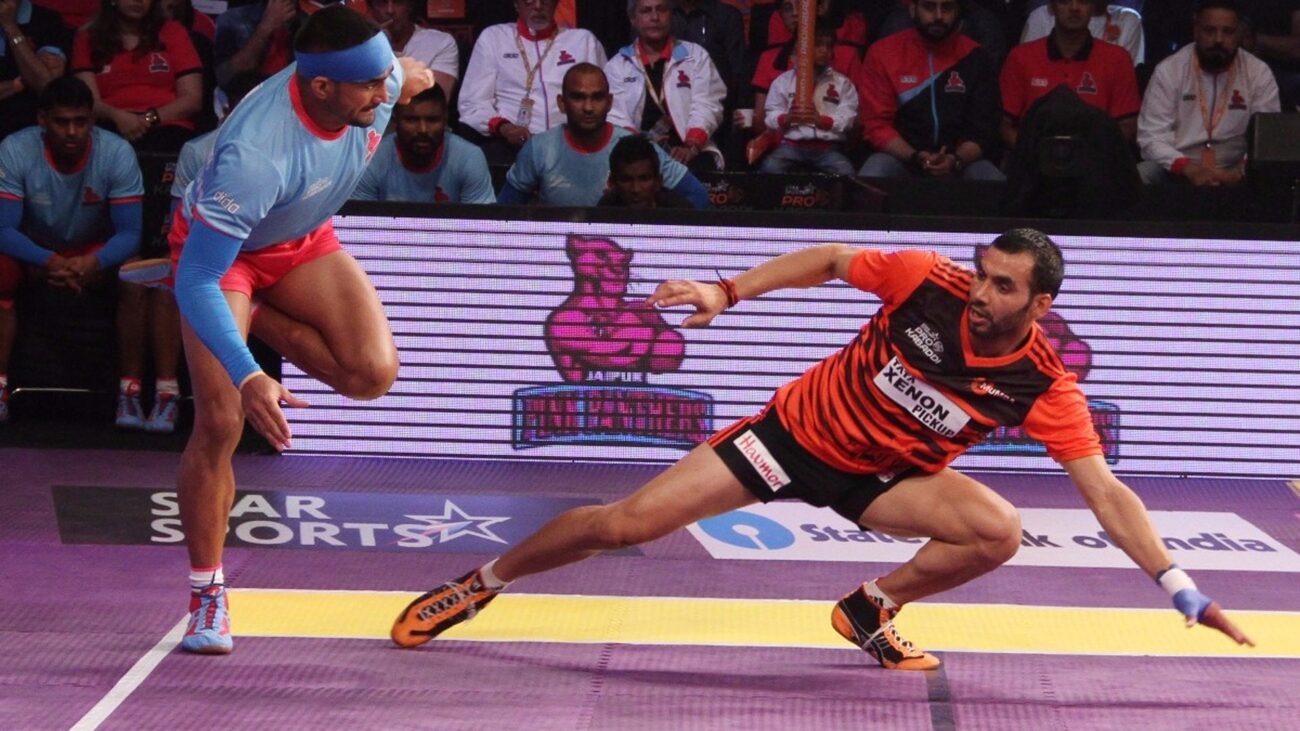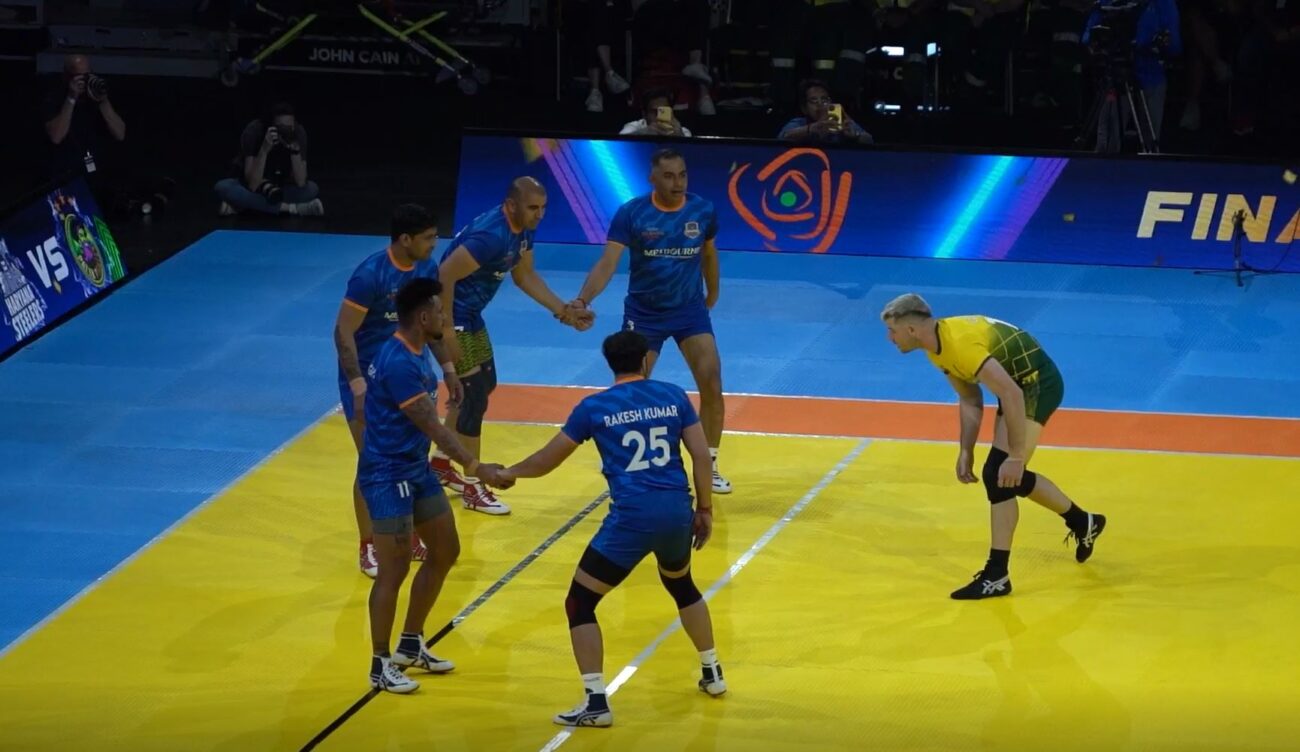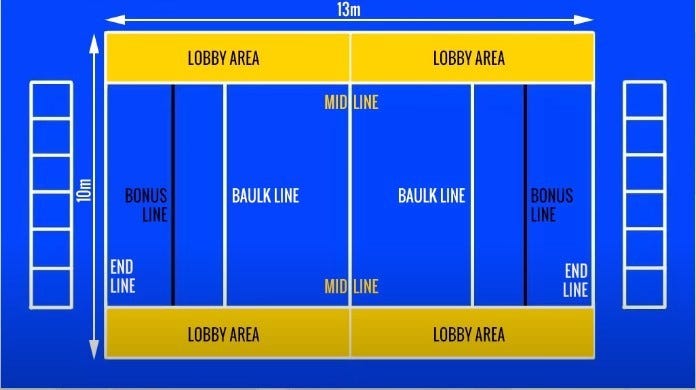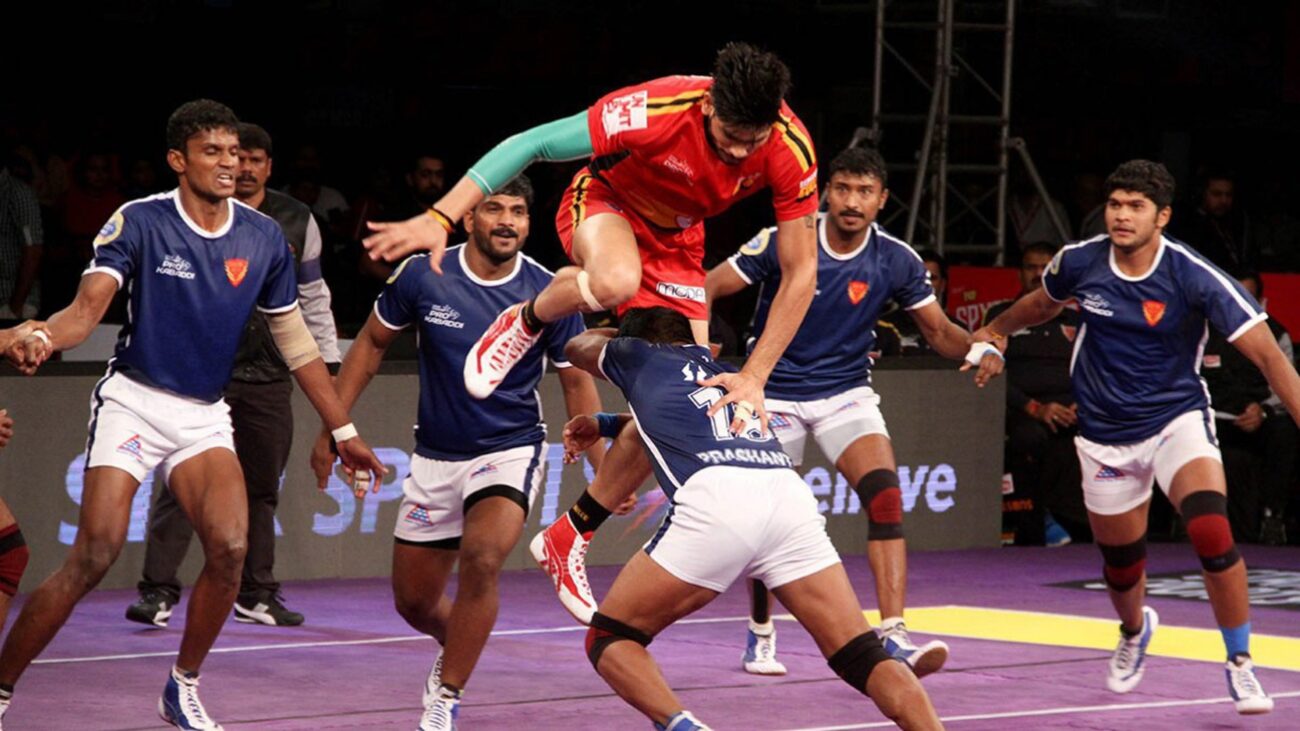
A successful Kabaddi raid can last only a few seconds, but within that short moment lies a complex combination of athletic ability, tactical thinking, and psychological skill.
To spectators, a great raid may look simple: a player crosses the line, touches an opponent, and returns safely.
In reality, every movement has a purpose.
The best raiders are not simply attacking defenders. They are creating a sequence of decisions designed to force mistakes. A small step can create hesitation. A fake movement can open space. A perfectly timed escape can turn a dangerous situation into a winning point.
A winning raid is not built from one skill.
It is a carefully designed performance combining footwork, timing, deception, scoring ability, and escape technique.
The First Phase: Entering the Opponent’s Territory
Before a raider attempts a touch or attack, the raid begins with preparation.
The moment the raider crosses the line, defenders begin analysing movement.
The raider must immediately consider:
- Defender positioning
- Available space
- Opponent weaknesses
- Team score situation
- Time remaining in the raid
A careless entry can allow defenders to establish control.
A smart raider enters with a plan.
Reading the Defensive Formation
Defenders rarely stand randomly.
Their positioning provides clues.
A raider looks for:
- Gaps between defenders
- A defender standing too far forward
- A weaker player in the formation
- An opportunity for a quick bonus point
The best raiders can identify these opportunities almost instantly.
Controlling the Pace
A common mistake is assuming every raid requires immediate action.
Elite raiders understand the value of patience.
By slowing the movement, they can:
- Force defenders to react
- Create uncertainty
- Observe defensive habits
- Wait for the right moment
The raid is a battle of timing.
Footwork: The Foundation of Every Great Raid
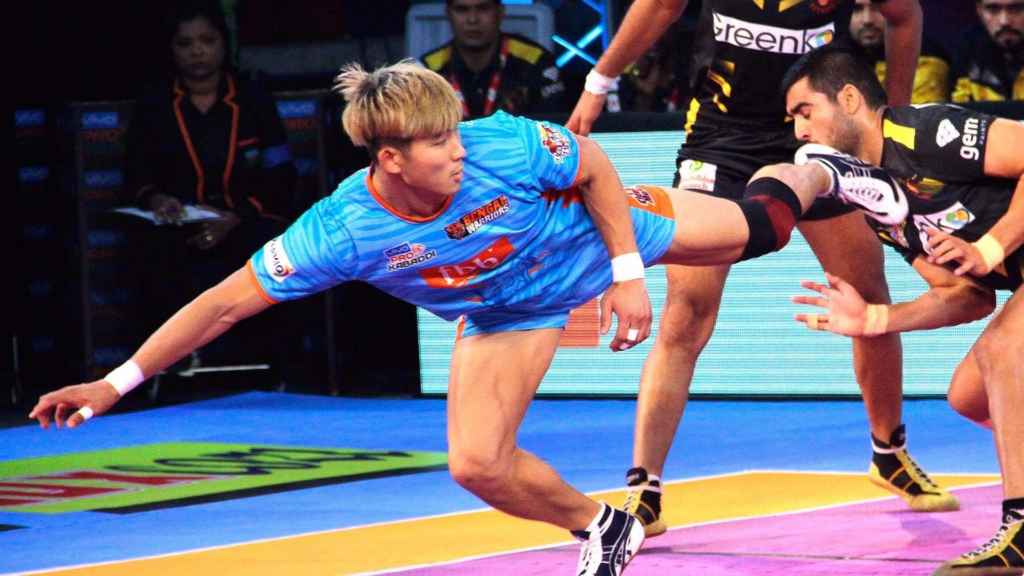
Footwork separates ordinary raiders from elite performers.
A raider’s feet create opportunities.
They allow players to attack, retreat, change direction, and escape.
Quick Direction Changes
Defenders rely on predicting movement.
A sudden change of direction can create the space needed for a successful touch.
Effective footwork involves:
- Short controlled steps
- Rapid acceleration
- Balance during movement
- Immediate recovery after changes
A raider who moves unpredictably is difficult to trap.
The Importance of Balance
A successful raid requires control.
A raider must maintain balance while:
- Approaching defenders
- Avoiding tackles
- Reaching for touches
- Changing direction
Poor balance creates openings for defenders.
Creating False Movement
Great footwork is not only about speed.
It is about making defenders believe something will happen.
A small step forward may suggest an attack.
A sudden pause may encourage defenders to move.
The raider is constantly creating and removing possibilities.
Timing: The Difference Between Opportunity and Failure
Kabaddi rewards perfect timing.
A touch attempted too early may fail.
A touch attempted too late may leave the raider trapped.
Elite raiders understand the exact moment when an opportunity appears.
Timing the Attack
A raider watches for:
- Defender hesitation
- Open space
- Poor positioning
- Slow reactions
The best attacks happen when defenders are not fully prepared.
Timing the Escape
A successful touch is only half the job.
The raider must return safely.
Many raids are decided after the point has already been scored.
A defender’s reaction may begin instantly, meaning the raider needs to judge:
- When to accelerate
- When to change direction
- When to use an escape technique
Deception: The Art of Making Defenders Guess
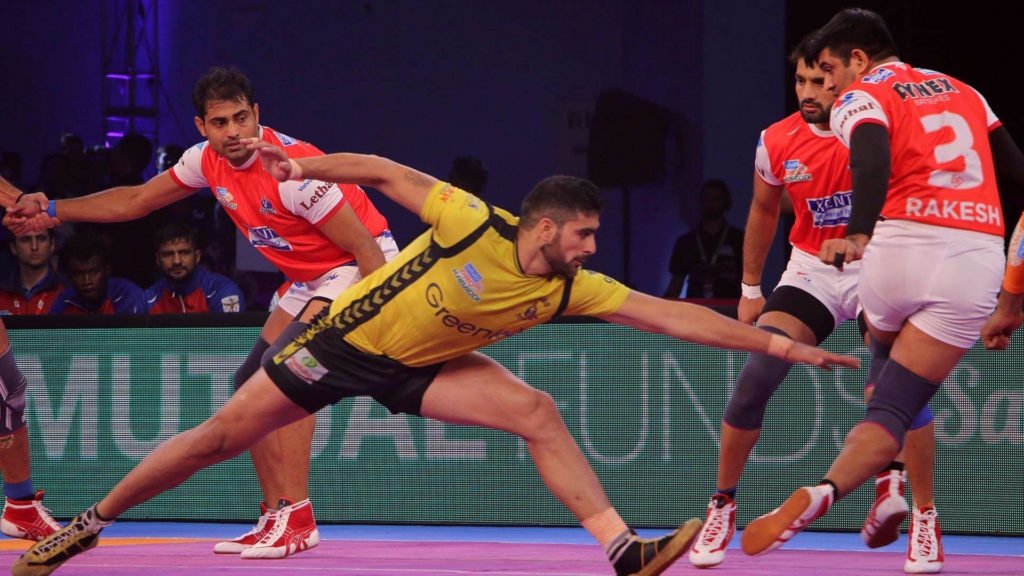
A great raider does not reveal intentions.
Deception is one of the most valuable weapons in Kabaddi.
The goal is simple:
Make defenders commit to the wrong decision.
Fake Attacks
A raider may move toward one defender without actually attempting a touch.
This can:
- Pull defenders out of position
- Create gaps
- Force early reactions
A fake attack is not wasted movement.
It is information gathering.
Body Language Tricks
Experienced raiders use their body position to create confusion.
A shoulder movement, head turn, or change in posture can suggest an attack direction.
Defenders must decide whether to react or wait.
That hesitation creates opportunity.
Hand Touches: Precision Over Power
The hand touch is one of the most recognisable attacking techniques in Kabaddi.
A successful hand touch requires:
- Reach
- Accuracy
- Timing
- Quick recovery
The raider must get close enough to score while remaining far enough away to escape.
Types of Touch Approaches
Different raiders develop different styles.
Some rely on:
- Fast reaching movements
- Sudden lunges
- Long-distance touches
- Quick directional changes
The best approach depends on the defender’s position.
The Risk of Overcommitting
A common mistake is reaching too far.
A successful touch requires control.
If the raider’s body moves too close to defenders, they may lose the ability to escape.
The perfect touch is not the longest one.
It is the safest one.
Bonus Points: Winning Without Contact
The bonus point adds another tactical dimension to Kabaddi.
Unlike a traditional touch, a bonus point allows a raider to score without directly tagging a defender.
However, attempting a bonus requires careful judgement.
When Bonus Points Work
A raider may consider a bonus when:
- Defenders are positioned deep
- The opportunity is available safely
- The team needs a low-risk point
The Defensive Response
Defenders also understand bonus attempts.
They may adjust positioning to:
- Block access
- Increase pressure
- Force the raider into a risky move
A bonus attempt becomes another psychological battle.
Escape Techniques: Turning Danger Into Victory
Many raids are decided after the initial attack.
Once defenders attempt a tackle, the raider’s escape ability becomes critical.
Speed Escape
Some raiders rely on explosive acceleration.
The objective:
Score quickly and return before defenders can react.
Direction Change Escape
Changing direction suddenly can disrupt defensive coordination.
A raider may move one way before quickly escaping another.
Balance and Body Control
A raider caught during a tackle must maintain control.
Strong balance allows players to:
- Avoid being pulled down
- Continue moving
- Reach safety
Mental Toughness
Escape situations are physically demanding, but mental strength matters too.
The raider must remain calm.
Panic creates mistakes.
The Perfect Raid: A Step-by-Step Breakdown
A textbook winning raid might look like this:
Step 1: Observe
The raider enters and studies the defence.
Step 2: Create Uncertainty
Footwork and movement force defenders to hesitate.
Step 3: Identify the Opportunity
The raider notices a weakness.
Step 4: Execute the Attack
A quick hand touch or bonus attempt creates the scoring chance.
Step 5: React Immediately
The raider changes from attacker to escape mode.
Step 6: Return Safely
The point is secured only when the raider crosses back successfully.
Every stage requires decision-making.
Why Great Raids Look Effortless
The most impressive Kabaddi attacks often appear simple because elite players make difficult decisions quickly.
A great raider combines:
- Athletic preparation
- Tactical awareness
- Psychological control
- Technical skill
What looks like instinct is usually years of training.
The Science Behind the Spectacle
Modern Kabaddi has evolved into a sport where every movement matters.
Coaches analyse:
- Raider patterns
- Defensive weaknesses
- Scoring efficiency
- Match situations
Players train not only their bodies but also their decision-making abilities.
The perfect raid is not just a display of speed.
It is a carefully calculated solution to a constantly changing problem.
Final Thoughts: The Raid as a Complete Skill
A winning Kabaddi raid is a combination of art and strategy.
Footwork creates the opportunity.
Timing chooses the moment.
Deception creates confusion.
Touches and bonus points create scoring chances.
Escape techniques complete the mission.
The best raiders do not simply attack.
They think, adapt, and manipulate the game in real time.
That is why a few seconds on the Kabaddi mat can contain so much skill.
A great raid is not just a sprint into enemy territory.
It is a perfectly calculated battle between courage, intelligence, and control.