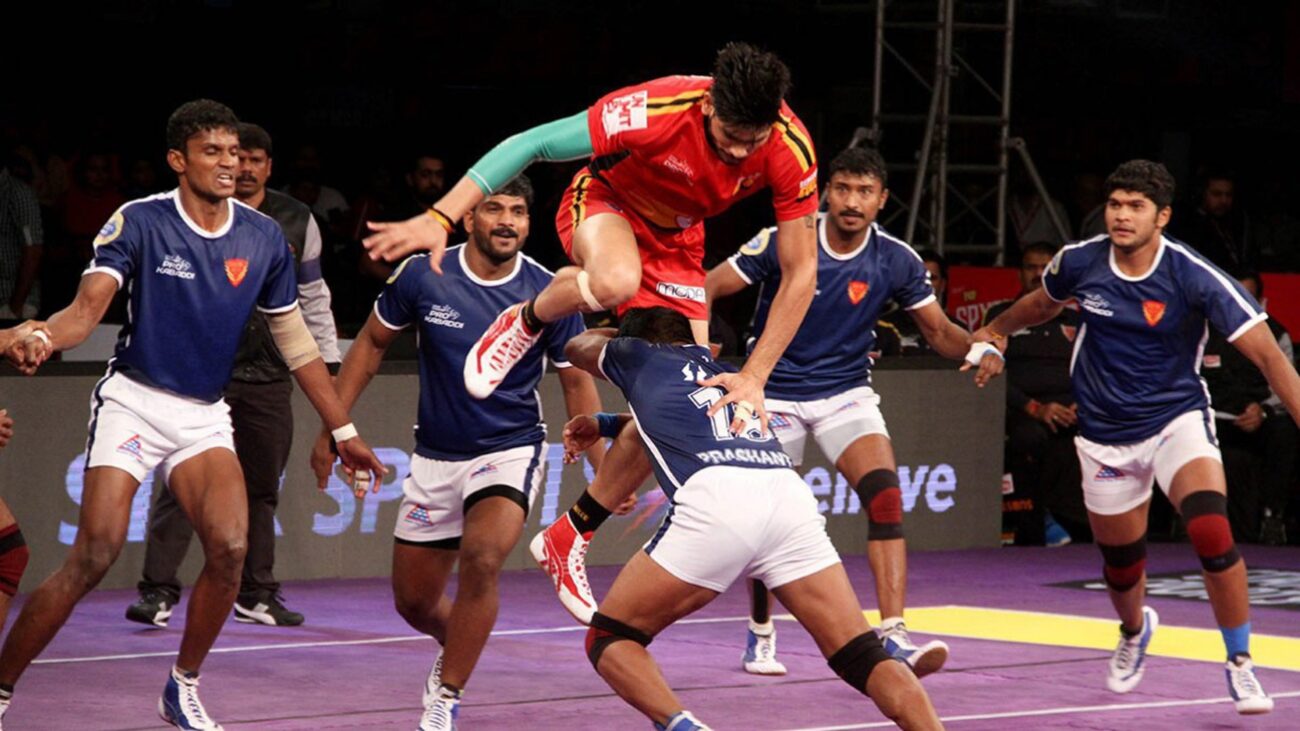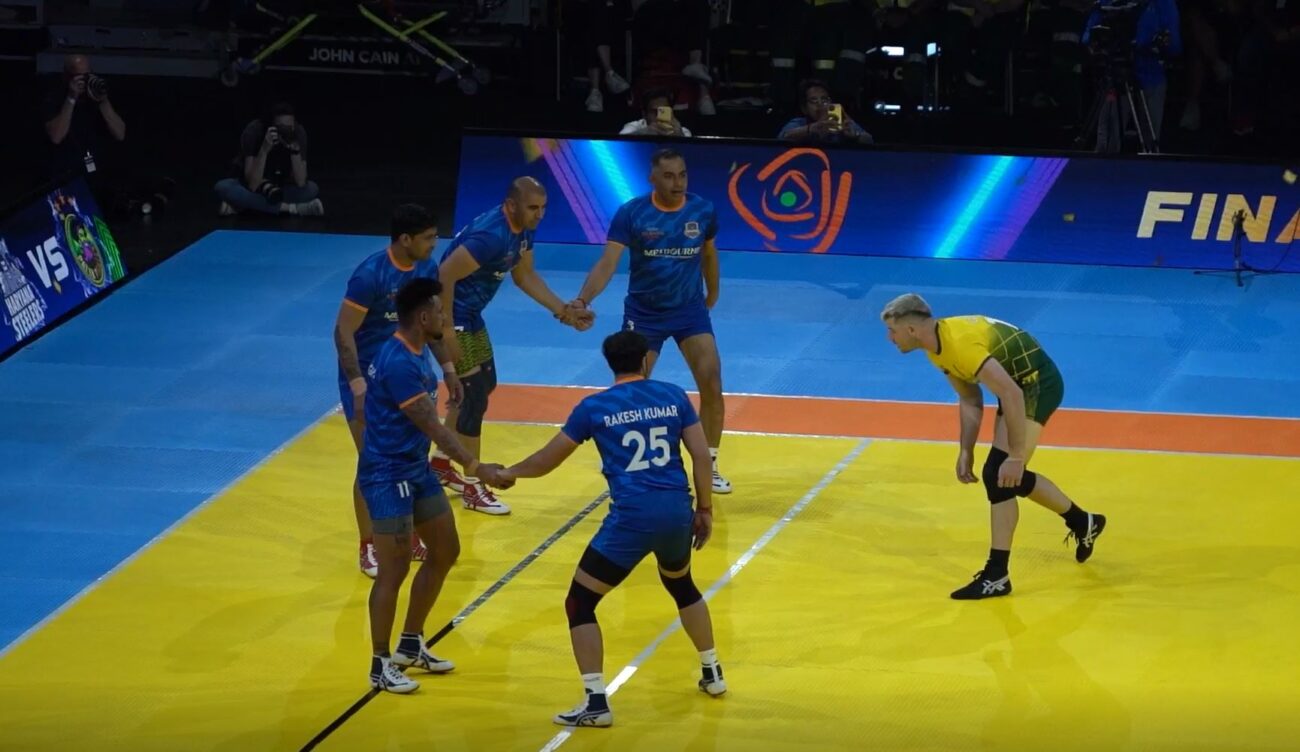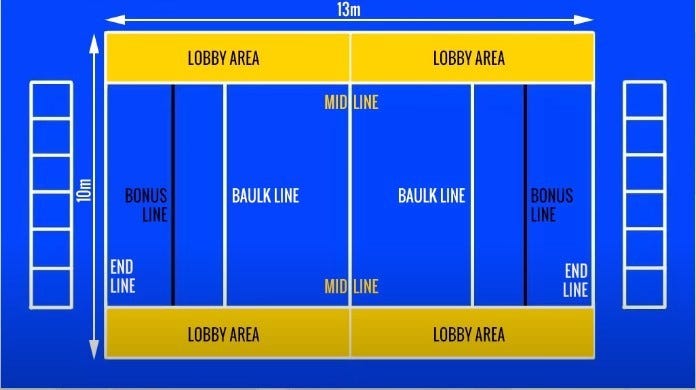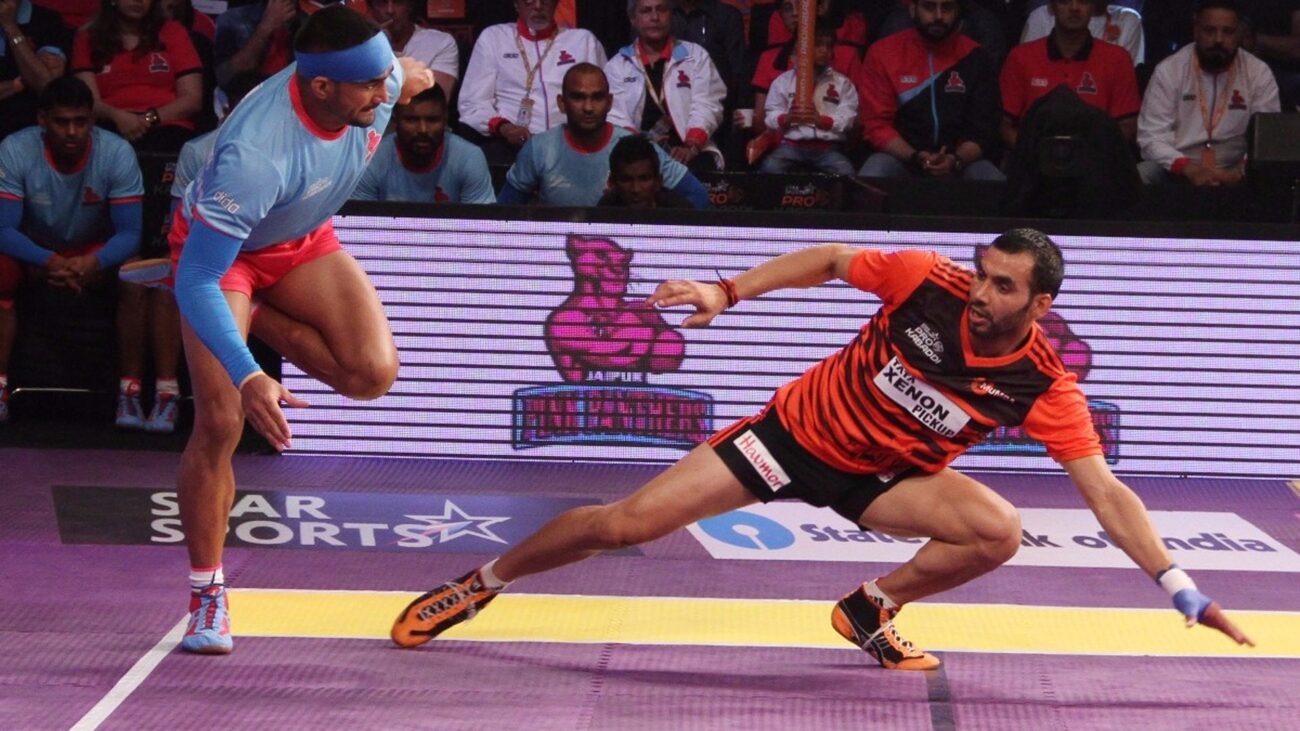
Kabaddi is often described as a battle between attack and defence.
A raider enters opposition territory looking for points, while defenders work together to stop the attack and turn momentum in their favour. The roles appear completely different, requiring separate skill sets, training methods, and tactical approaches.
But in modern Kabaddi, the question is more complicated:
What wins matches more often—a brilliant raider or an elite defensive unit?
The answer depends on balance.
A team cannot succeed with only powerful attackers or only strong defenders. Championships are usually won by sides that understand how to combine individual brilliance with disciplined teamwork.
To understand the modern game, it is important to examine the unique demands of both positions.
The Raider: The Team’s Offensive Weapon
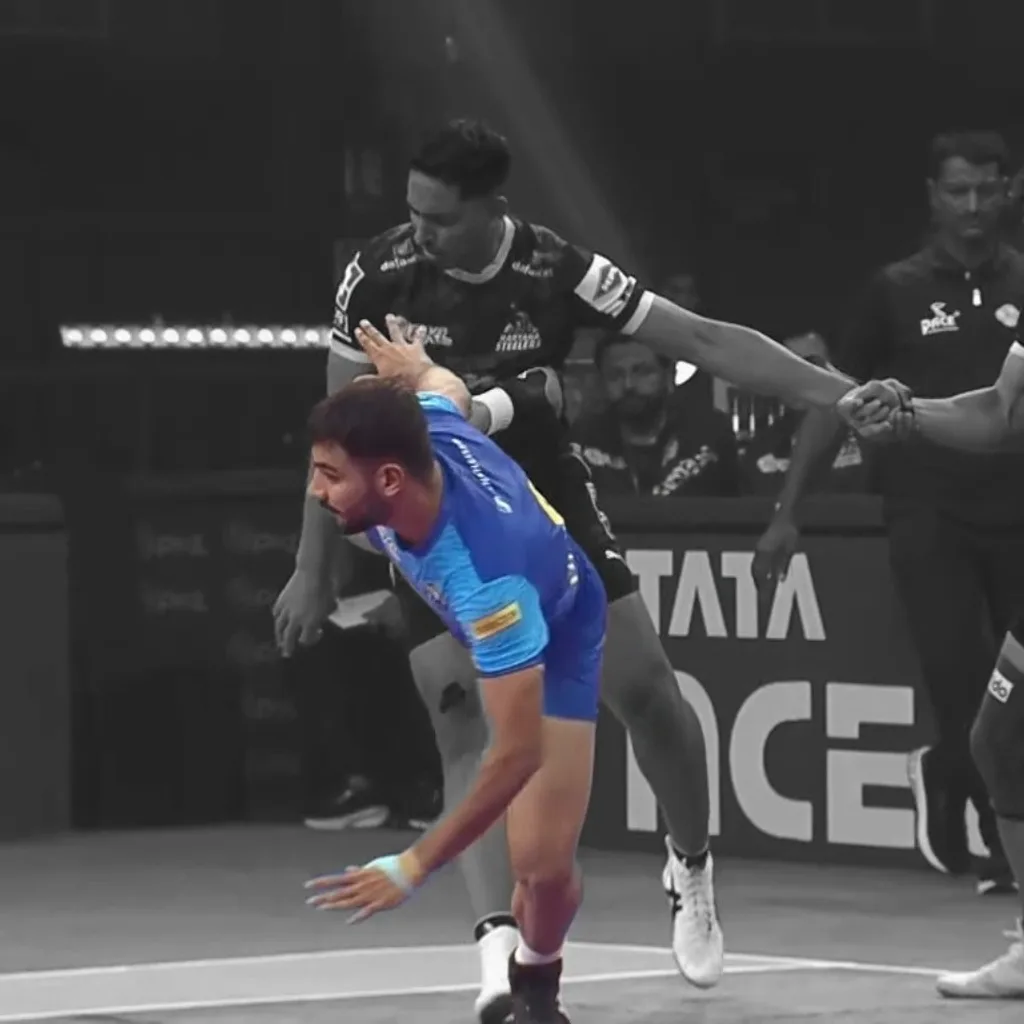
A raider is responsible for creating scoring opportunities.
Every raid involves a combination of speed, awareness, confidence, and decision-making. The best raiders are not simply fast athletes—they are problem solvers operating under extreme pressure.
A successful raider must:
- Enter enemy territory confidently
- Identify weaknesses in the defence
- Score points quickly
- Avoid tackles
- Return safely before the raid ends
The margin between success and failure is incredibly small.
One wrong step can turn a potential point into an opponent’s advantage.
The Physical Demands of a Raider
Modern raiding requires explosive athletic ability.
Key physical attributes include:
Speed and Acceleration
A raider often needs to move suddenly:
- Closing distance to a defender
- Escaping a tackle attempt
- Changing direction instantly
Short bursts of acceleration are often more valuable than long-distance speed.
Agility and Footwork
Elite raiders use unpredictable movements to confuse defenders.
Important techniques include:
- Quick direction changes
- Sudden stops
- Balance recovery
- Body control
A raider who can move efficiently creates more opportunities.
Stamina
A match requires repeated high-intensity efforts.
Raiders must recover quickly between attempts because they may need to attack again within minutes.
The Mental Skills of a Raider
Physical ability alone does not create a great raider.
Mental strength is equally important.
Top raiders develop:
Match Awareness
A raider must understand:
- The current score
- Remaining time
- Defender positions
- Risk versus reward
A risky raid may be valuable when a team needs points but unnecessary when protecting a lead.
Confidence Under Pressure
Raiders often face situations where one mistake can change the match.
They need the confidence to attack while remaining controlled.
Creativity
Defenders study patterns.
If a raider becomes predictable, opponents can prepare.
The best raiders constantly develop new approaches.
The Defender: The Foundation of Team Success
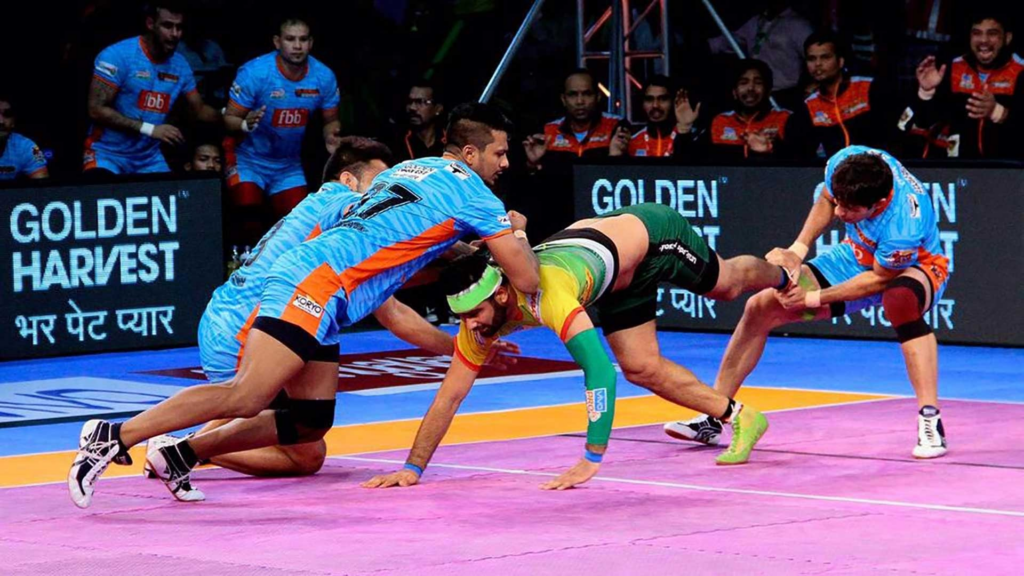
While raiders receive much of the attention, elite defence wins many Kabaddi matches.
A strong defensive unit can completely change the rhythm of a game.
Defenders do not simply stop attacks.
They create pressure, force mistakes, and control the pace of the match.
The Physical Demands of a Defender
Defensive skills require a different athletic profile.
Strength and Power
Defenders need the physical ability to:
- Hold raiders
- Complete tackles
- Resist escape attempts
- Maintain control during contact
Lower-body strength and grip power are especially important.
Timing and Reaction Speed
A defender who attacks too early gives the raider an advantage.
A defender who reacts too late may lose the opportunity.
Successful tackles depend on perfect timing.
Coordination
Defence is often a team action.
Players must move together, understand positioning, and support each other.
A single mistake can create an escape route.
Defensive Intelligence: The Hidden Skill
The best defenders are not simply powerful athletes.
They are strategic thinkers.
They analyse:
- Raider habits
- Preferred movements
- Favourite techniques
- Previous match behaviour
A defender who understands a raider’s tendencies can gain a major advantage before the raid begins.
Common Defensive Strategies
Modern Kabaddi defence involves several tactical approaches.
Containing the Raider
Instead of immediately attacking, defenders may limit movement and force the raider into a difficult position.
Creating Pressure
A strong formation can make a raider feel trapped.
The goal is to encourage rushed decisions.
Coordinated Tackling
Different defenders have different responsibilities.
One player may attack the legs while others block escape routes.
Teamwork is essential.
Training Differences: Raiders vs Defenders
Although both roles require overall fitness, their training priorities differ.
Raider Training Focus
Raiders typically emphasise:
Explosive Movement
Training includes:
- Sprint drills
- Jump exercises
- Direction changes
- Reaction exercises
Skill Development
Raiders repeatedly practise:
- Hand touches
- Escapes
- Footwork
- Fake movements
Decision-Making
Many training sessions include match simulations where players must choose when to attack or retreat.
Defender Training Focus
Defenders focus on:
Strength Development
Important areas include:
- Leg strength
- Core stability
- Grip power
- Upper-body control
Tackling Technique
Defenders practise:
- Timing
- Body positioning
- Coordination with teammates
Reading Attackers
Video analysis and tactical preparation are increasingly important in modern Kabaddi.
Which Role Has a Bigger Impact?
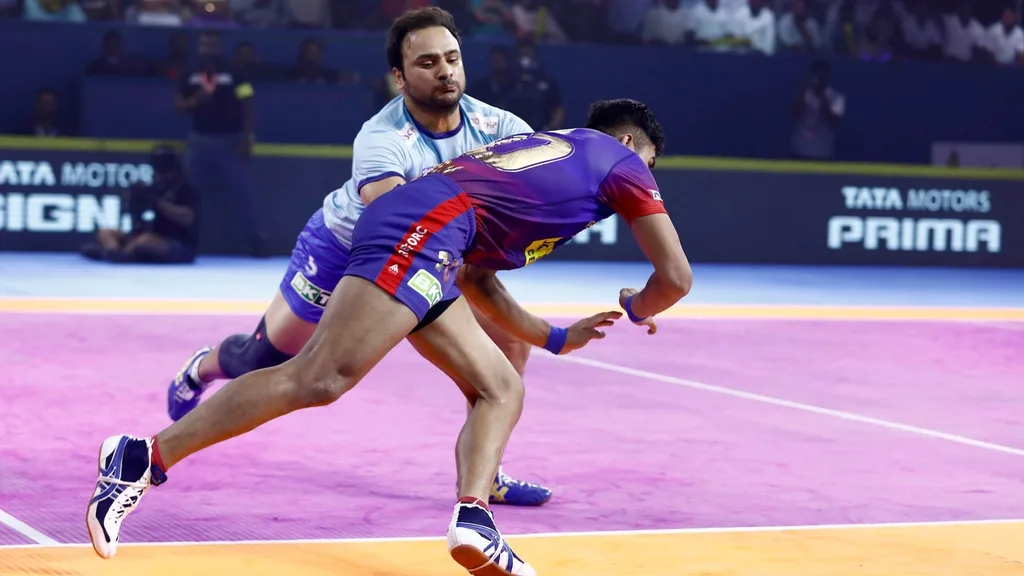
The answer changes depending on the match situation.
When Raiders Make the Difference
A world-class raider can:
- Score consistently
- Break strong defences
- Change momentum quickly
- Create pressure on opponents
A dominant raider can carry a team through difficult moments.
When Defenders Decide Matches
A strong defensive unit can:
- Stop opposition scoring runs
- Force mistakes
- Protect leads
- Create opportunities for counter-attacks
A team with reliable defence is difficult to defeat.
The Importance of Balance in Modern Kabaddi
The best teams understand that raiders and defenders depend on each other.
A great raider creates points.
A great defender prevents points.
A championship team needs both.
Modern Kabaddi has become increasingly tactical, with coaches building balanced squads that combine:
- Athletic ability
- Tactical intelligence
- Team communication
- Mental toughness
The days of relying on one superstar are becoming less common.
Success now comes from complete team performance.
The Ultimate Winner: Adaptability
If there is one skill that separates elite Kabaddi players, it is adaptability.
A raider must adjust when defenders change tactics.
A defender must adjust when raiders develop new techniques.
The sport is constantly evolving.
The best players are those who can read situations, make decisions quickly, and perform under pressure.
Final Thoughts: Attack Wins Moments, Defence Wins Battles
Raiders create excitement.
Their explosive movements and daring attacks often define memorable moments.
But defenders provide the structure that allows teams to succeed.
In modern Kabaddi, neither role is more important than the other.
The greatest teams combine fearless raiding with intelligent defence.
Because Kabaddi is not ultimately about attack versus defence.
It is about finding the perfect balance between the player who takes the risk and the players who stop it.