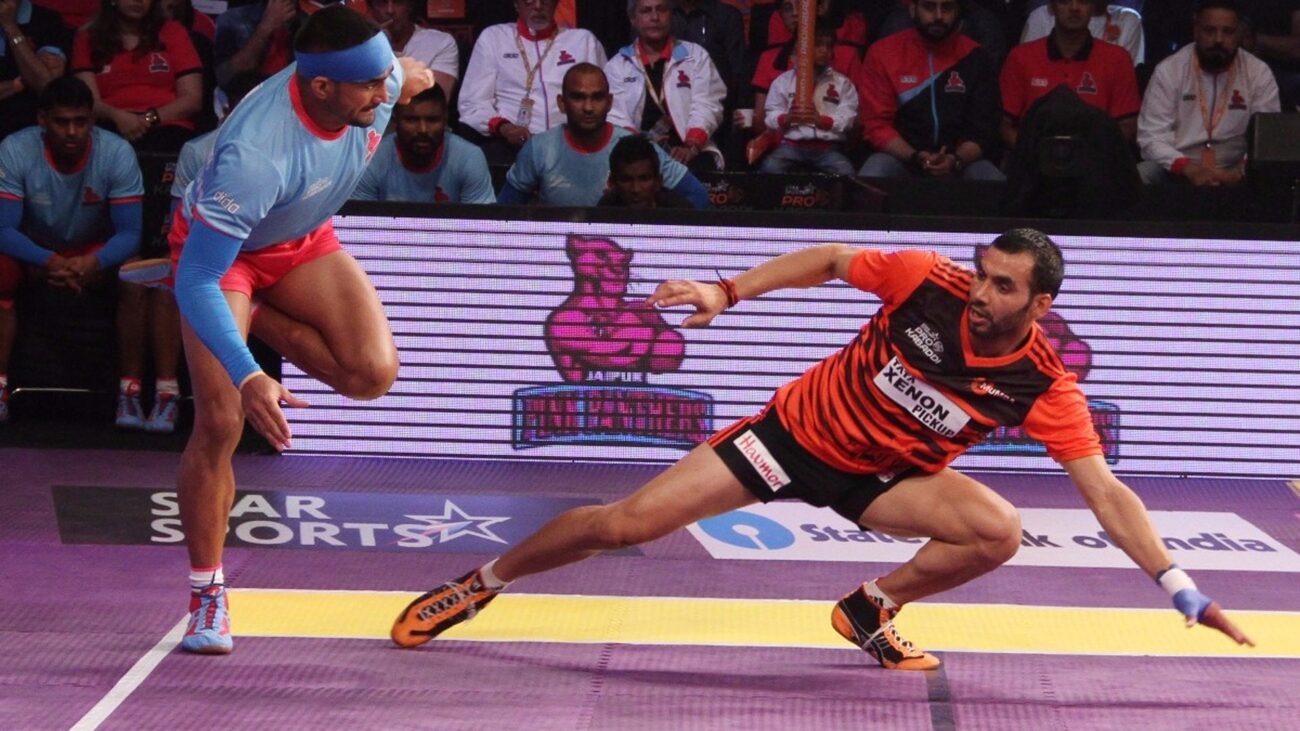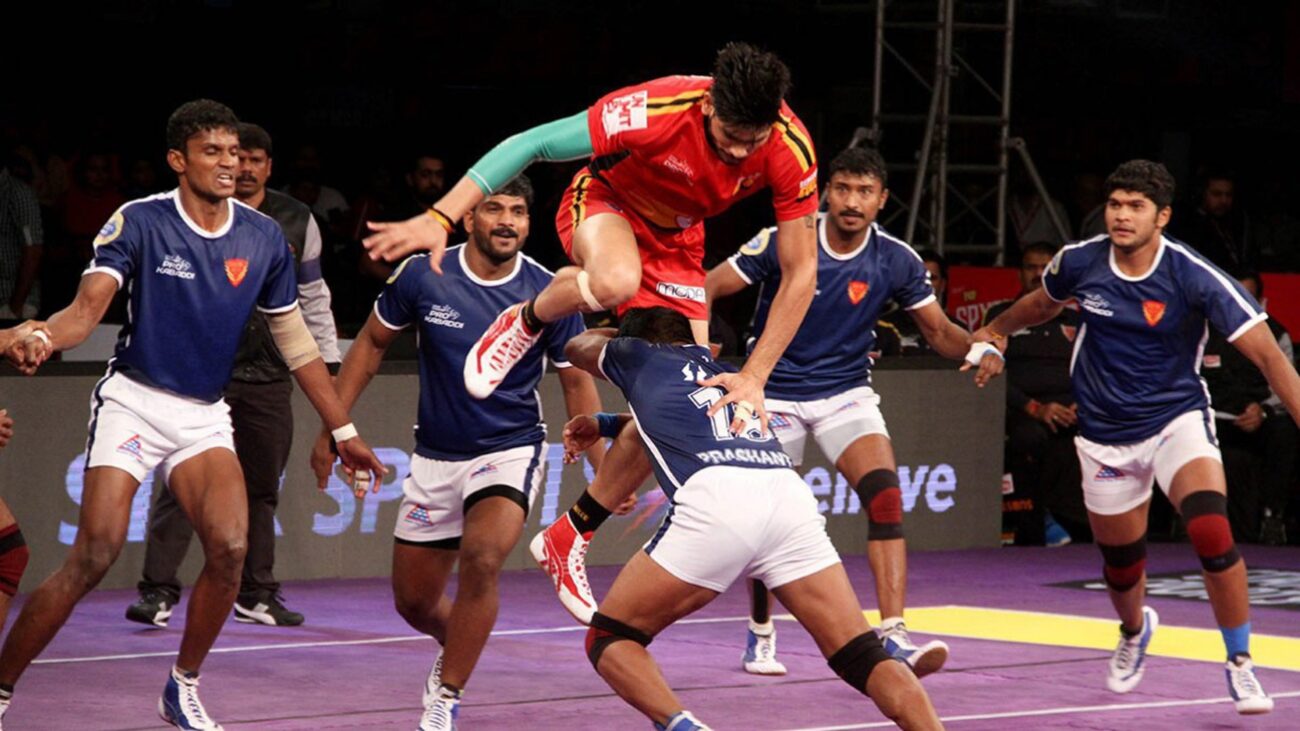
At first glance, Kabaddi appears to be a simple contest of speed and strength.
A raider crosses the line, attempts to tag defenders, and tries to return safely. Defenders work together to stop the attack and score a point. The action is fast, physical, and explosive.
But beneath the surface, Kabaddi is a game of strategy, anticipation, and psychological warfare.
Every raid is a carefully calculated battle of decisions. Every defensive formation is a puzzle waiting to be solved. A raider is not simply running into opposition—they are entering a space where every movement is analysed, every hesitation is noticed, and every mistake can decide the outcome of a match.
Kabaddi is not just a physical sport.
It is a chess match played on a mat.
The Raider’s Mind Game
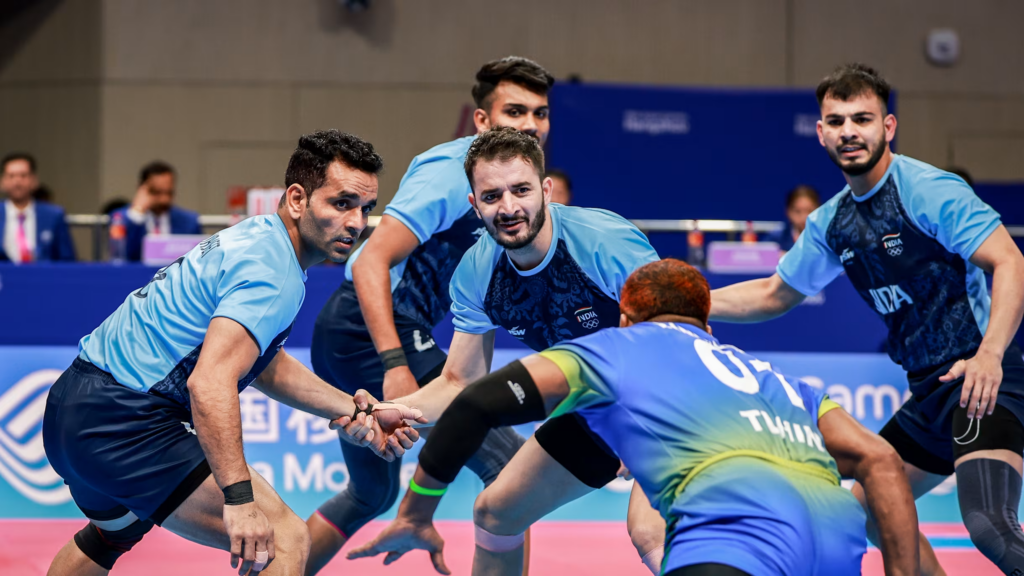
A successful raider needs more than speed and agility. The best raiders understand that their greatest weapon is unpredictability.
Before making a move, a raider studies:
- Defender positioning
- Gaps in the formation
- Individual reactions
- Previous raid patterns
- The overall match situation
A raider is constantly asking:
- Which defender is vulnerable?
- Who is likely to move first?
- Can I create hesitation?
- Should I attack now or wait?
The difference between an average raider and an elite raider is often decision-making.
A powerful player may be able to escape tackles through strength, but a smart raider avoids dangerous situations before they happen.
The Art of Reading Defenders
Top raiders develop the ability to read small signals from defenders.
A slight movement of the foot.
A change in body position.
A shift in weight.
A moment of hesitation.
These tiny details can reveal a defender’s intention.
For example:
- A defender leaning forward may be preparing for an ankle hold.
- A defender moving sideways may be attempting to close an escape route.
- A defender standing too aggressively may create space behind them.
The raider’s challenge is to recognise these patterns instantly and react before the defenders can execute their plan.
Defensive Strategy: The Trap Before the Tackle
Defending in Kabaddi is not simply about chasing a raider.
The strongest defensive teams create situations where the raider feels confident—only to discover that confidence was the trap.
A defensive unit works together by controlling:
- Space
- Timing
- Movement
- Communication
A successful defence often begins before the tackle itself.
The defenders may intentionally leave an apparent opening, encouraging the raider to attack. Once the raider commits, the defenders close the gap and execute their plan.
It is a strategy based on patience.
The best defenders do not always react.
Sometimes they wait.
The Battle Between Instinct and Calculation
Kabaddi creates a fascinating conflict between instinct and strategy.
A raider may see an opportunity and feel the urge to attack immediately.
But experience teaches that not every opportunity is real.
Defenders may deliberately create openings to encourage mistakes.
Similarly, defenders may hesitate because they expect the raider to use a familiar move.
This creates a constant cycle of prediction:
- The raider predicts the defender.
- The defender predicts the raider.
- The raider predicts the prediction.
- The defender tries to predict that too.
The game becomes a mental battle happening at incredible speed.
Psychological Traps Used by Raiders
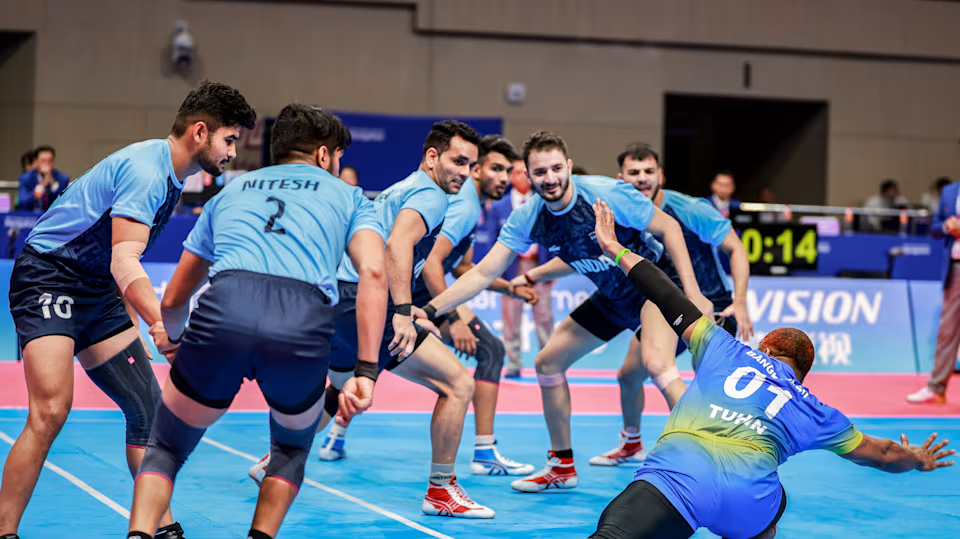
Elite raiders use several techniques to influence defender behaviour.
The Fake Attack
A raider may move aggressively toward one defender without actually committing to the attack.
The goal is to force a reaction.
If a defender moves too early, they may expose space.
The Change of Direction
Many successful raids depend on sudden changes in movement.
A raider may approach one side before quickly switching direction and targeting another area.
This tests the defenders’ coordination and reaction speed.
The Patience Game
Sometimes the smartest raid is not the most aggressive one.
A patient raider can force defenders to become uncomfortable.
As time passes:
- Defenders may lose concentration.
- Formation gaps may appear.
- A small mistake may create an opportunity.
Patience becomes a weapon.
Defensive Mind Games
Defenders also use psychological tactics.
Creating Pressure
A strong defensive formation can make a raider feel surrounded even before any tackle attempt begins.
The goal is to make the raider rush.
A rushed decision often becomes a failed raid.
Predicting Favourite Moves
Most players have preferred techniques.
A raider may regularly rely on:
- A particular hand touch
- A signature escape move
- A favourite direction of attack
Experienced defenders study these habits and prepare counters.
At the highest level, previous matches become valuable information.
Every movement creates a clue.
The Importance of Team Communication
Although Kabaddi often highlights individual battles, defence is built on teamwork.
A single defender rarely stops an elite raider alone.
Successful defensive units communicate constantly through:
- Positioning
- Signals
- Timing
- Awareness
One defender creates pressure.
Another prepares the tackle.
A third protects the escape route.
The best defensive teams operate almost like a single organism.
The Role of the Captain
A Kabaddi captain is not only a leader but also a tactical decision-maker.
During a match, the captain must evaluate:
- When to attack aggressively
- When to defend safely
- Which players should take responsibility
- How opponents are adapting
A captain must think several moves ahead, much like a chess player planning future positions.
Why Kabaddi Rewards Intelligence as Much as Athleticism
Speed, strength, and fitness are essential in Kabaddi.
But physical ability alone is not enough.
A slower player with excellent awareness can defeat a stronger opponent by making better decisions.
The sport rewards:
- Observation
- Timing
- Creativity
- Discipline
- Strategic thinking
Every raid is a problem to solve.
Every tackle is a calculated risk.
Kabaddi’s Hidden Battle of Nerves
Perhaps the most fascinating part of Kabaddi is the psychological pressure.
Players must remain calm while:
- The crowd creates noise
- Opponents attempt to intimidate them
- The scoreboard increases the pressure
- Every decision carries consequences
A single moment of hesitation can change the entire match.
The ability to stay focused under pressure separates great players from ordinary ones.
The Future of Tactical Kabaddi
Modern Kabaddi continues to evolve.
Teams increasingly use:
- Video analysis
- Performance data
- Opponent scouting
- Advanced training methods
Coaches study patterns and prepare strategies before matches begin.
However, the heart of Kabaddi remains the same.
Two opponents meet on the mat.
One tries to create an opportunity.
The other tries to remove it.
More Than a Physical Contest
Kabaddi may look like a battle of strength, but its deepest challenges happen in the mind.
The raider is solving a defensive puzzle.
The defenders are predicting an attacker’s intentions.
Every movement has meaning.
Every decision carries risk.
Like chess, Kabaddi rewards those who can think ahead. The difference is that in Kabaddi, the pieces are not moved across a board—they are moving at full speed, fighting for every centimetre of space.
That is what makes the sport so captivating.
Kabaddi is not simply a game of contact.
It is a game of intelligence, courage, and strategy played on a living chessboard.